
Introduction
When most people think of building abs, they immediately picture a defined six-pack. However, a truly functional core goes far beyond aesthetics. Your core is the powerhouse of your entire body, acting as the central link connecting your upper and lower limbs. Whether you are lifting heavy groceries, sitting at your desk in Sodepur, or running along the streets of Kolkata, a strong core stabilizes your spine, improves your posture, and prevents lower back pain.
At Train With Suman, we believe that you do not need an expensive gym membership or complex machinery to develop incredible abdominal strength. With the right selection of exercises, proper form, and a structured progression, you can achieve your dream transformation right in the comfort of your home. Using minimal equipment like a single dumbbell, a resistance band, or just your own bodyweight, you can build a resilient and powerful midsection.
In this comprehensive guide, we will break down the science of the abdominal muscles, share a highly effective home workout routine, and discuss how to fuel your recovery using familiar, nutrient-dense Indian foods. Let us dive into the ultimate home core training experience.
The Anatomy of Your Core
To train your midsection effectively, it is essential to understand that the "core" is not a single muscle. It is a complex network of muscles that wrap around your trunk:
- Rectus Abdominis: This is the front-facing muscle responsible for flexing the spine (the classic "six-pack" look).
- Obliques (Internal and External): Located on the sides of your torso, these muscles control rotation and lateral flexion of the spine.
- Transverse Abdominis (TVA): The deepest layer of your abdominal wall, acting like a natural corset to pull your abdomen in and stabilize your spine.
- Erector Spinae: The muscles running along your spine that assist in extension and posture control.
The Ultimate Home Abs Workout
Perform this workout 2 to 3 times per week, allowing at least 48 hours of rest between sessions for optimal recovery.
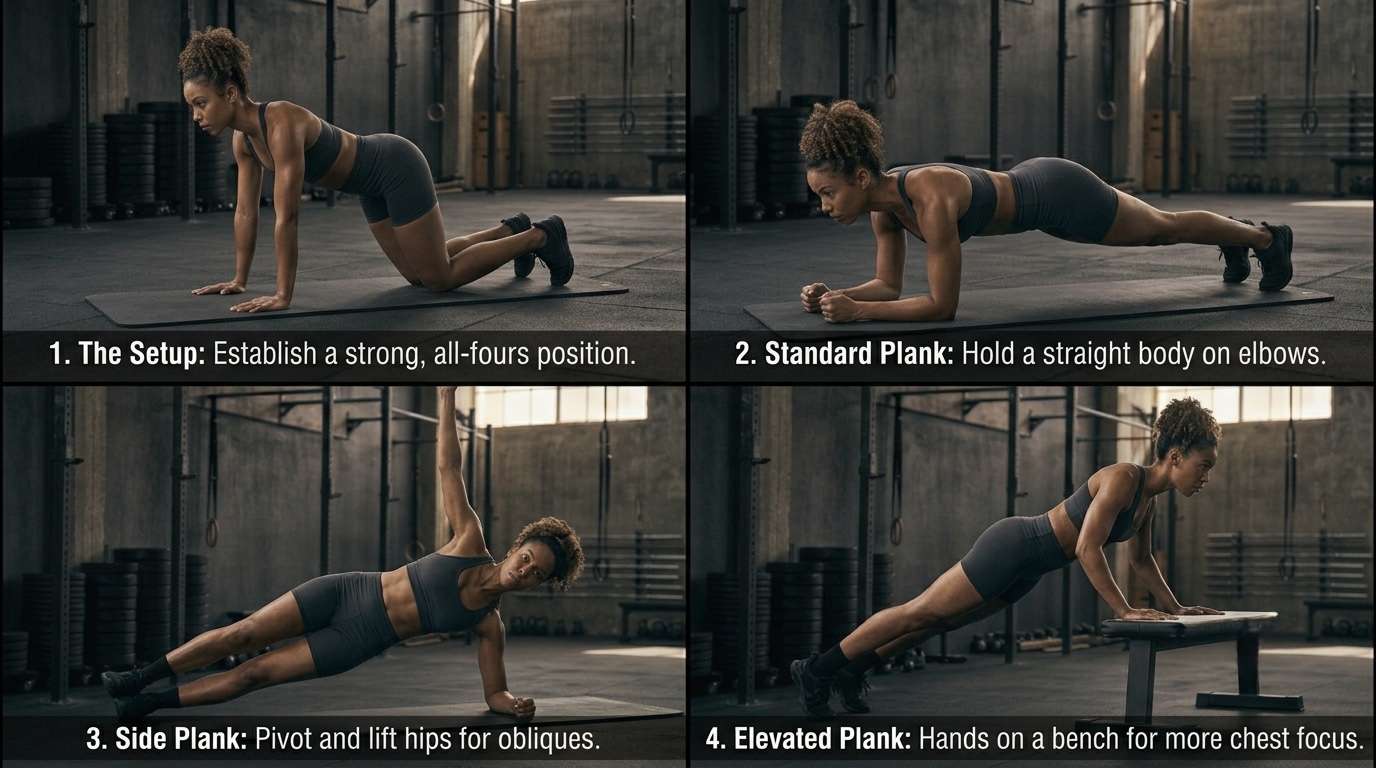
1. RKC Plank
- Target Muscles: Transverse Abdominis, Rectus Abdominis, Glutes.
- Description: Unlike a standard passive plank, the Russian Kettlebell Club (RKC) plank focuses on maximum active tension.
- Technique: Get into a standard forearm plank. Clench your fists, pull your elbows down toward your toes, and squeeze your glutes and quads as hard as possible. Your body should feel like it is shaking within seconds.
- Sets/Reps: 3 sets of 15 to 20 seconds of maximum tension.
- Progression: Increase the duration of active tension to 30 seconds.
2. Hollow Body Hold
- Target Muscles: Rectus Abdominis, Deep Stabilizers.
- Description: A gymnastic staple that builds incredible isometric core strength.
- Technique: Lie flat on your back. Press your lower back firmly into the floor (no space should remain under your lower back). Raise your legs a few inches off the ground and lift your shoulder blades up, reaching your arms overhead or along your sides.
- Sets/Reps: 3 sets of 20 to 30 seconds.
- Progression: Lower your legs closer to the floor while keeping your lower back completely flat.
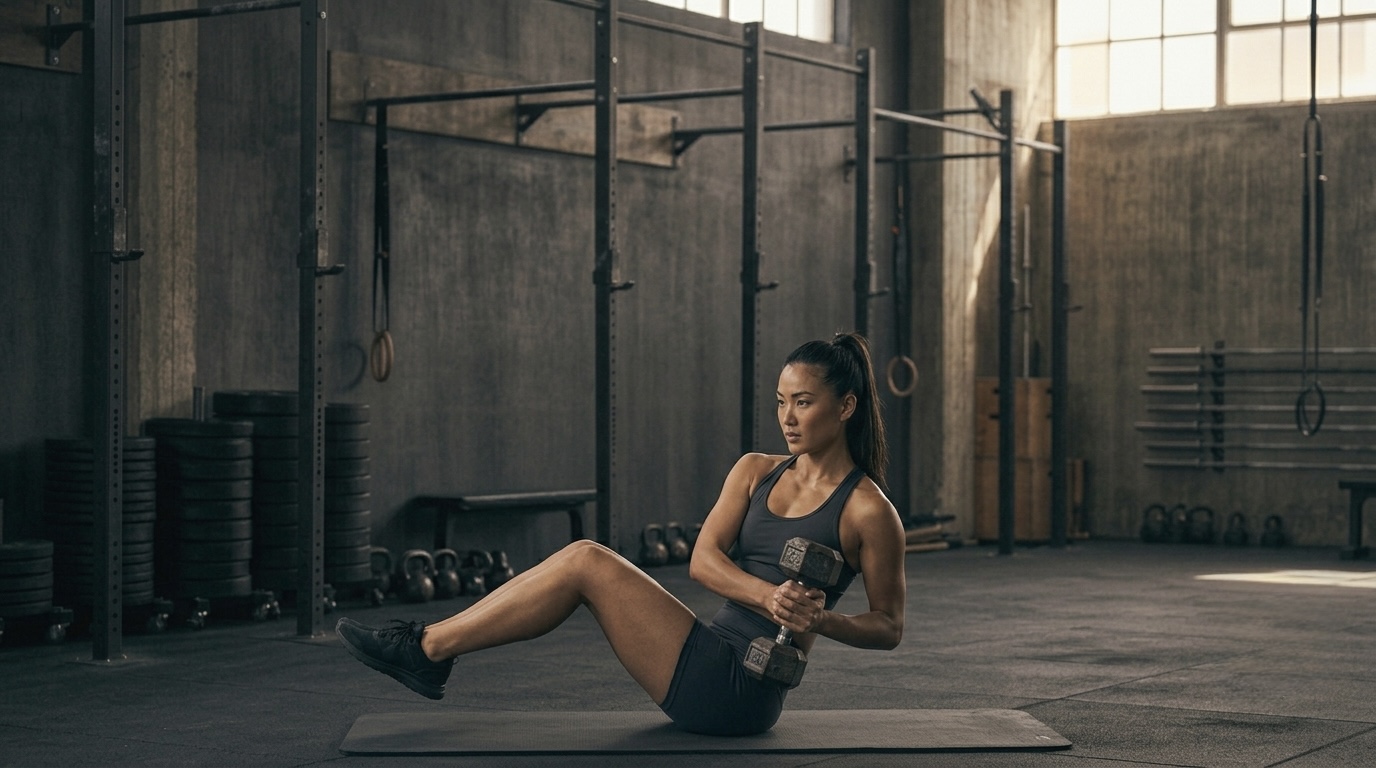
3. Dumbbell Russian Twists
- Target Muscles: Obliques, Transverse Abdominis.
- Description: A rotational movement that strengthens your obliques and improves rotational stability.
- Technique: Sit on the floor with your knees bent. Hold a light dumbbell with both hands. Lean back slightly, keeping your spine straight. Rotate your torso from side to side, moving the dumbbell toward the floor beside your hips.
- Sets/Reps: 3 sets of 12 to 15 reps per side.
- Progression: Lift your feet off the floor to challenge your balance.
4. Resistance Band Pallof Press
- Target Muscles: Obliques, Transverse Abdominis (Anti-Rotation).
- Description: This exercise teaches your core to resist rotation, which is crucial for protecting your lower back.
- Technique: Anchor a resistance band at chest height. Stand sideways to the anchor, holding the band with both hands at your chest. Press the band straight out in front of you, resisting the pull to twist back toward the anchor. Hold for 2 seconds, then return to your chest.
- Sets/Reps: 3 sets of 10 to 12 reps per side.
- Progression: Stand further away from the anchor point to increase the band tension.
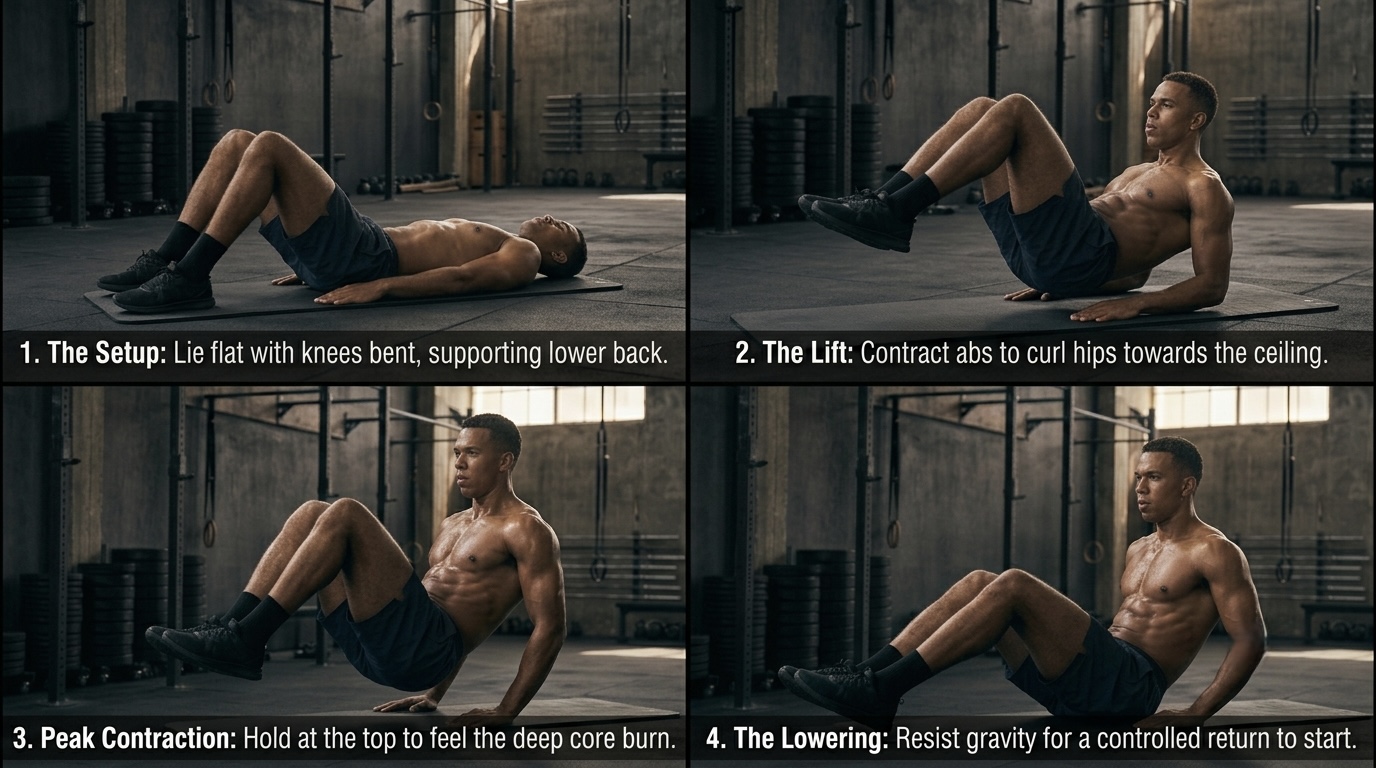
5. Reverse Crunches
- Target Muscles: Lower Rectus Abdominis.
- Description: An excellent movement to target the lower region of the abdominal wall without straining your neck.
- Technique: Lie on your back with your hands by your sides. Bend your knees at a 90-degree angle. Tilt your pelvis back and pull your knees toward your chest, lifting your hips slightly off the floor. Slowly lower back down.
- Sets/Reps: 3 sets of 12 to 15 controlled reps.
- Progression: Perform the movement with straight legs (Leg Raises) once your strength improves.
Workout Summary Table
| Exercise | Target Muscle Group | Sets | Reps / Duration | Rest Period |
|---|---|---|---|---|
| RKC Plank | Transverse Abdominis | 3 | 15-20 seconds | 60 seconds |
| Hollow Body Hold | Deep Core Stabilizers | 3 | 20-30 seconds | 60 seconds |
| Dumbbell Russian Twists | Obliques | 3 | 12-15 reps per side | 45 seconds |
| Resistance Band Pallof Press | Anti-Rotation / Obliques | 3 | 10-12 reps per side | 45 seconds |
| Reverse Crunches | Lower Abdominals | 3 | 12-15 reps | 60 seconds |
Alternative Variations
If you are a beginner or looking to scale up your core training, try these variations:
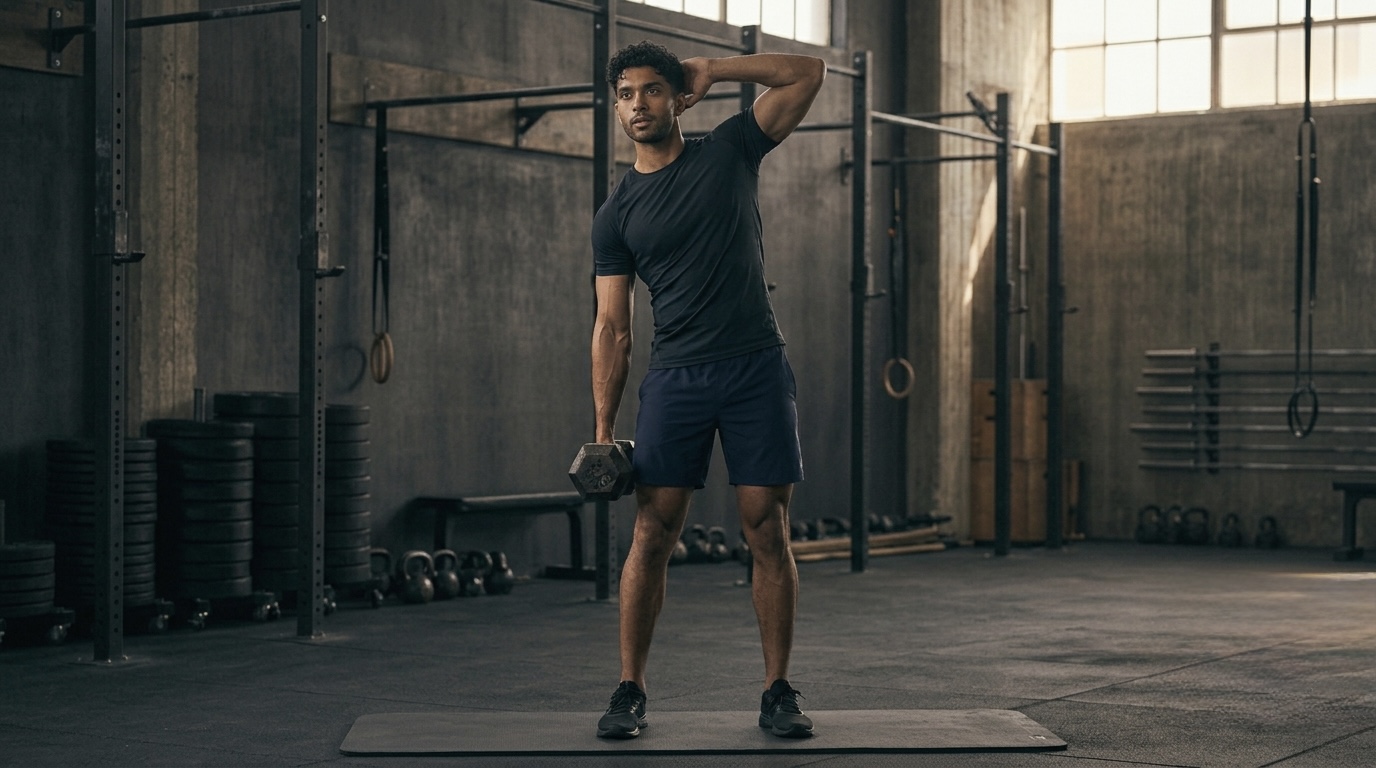
- Beginner Options: If the Hollow Body Hold is too difficult, bend your knees at a 90-degree angle and keep your hands by your sides (Tucked Hollow Hold). For the Russian Twists, perform them without any weights, keeping your feet firmly planted on the floor.
- Advanced Options: To make the Pallof Press harder, perform it in a half-kneeling position. For the RKC Plank, try walking your elbows slightly forward to increase the lever length and demand on your abdominals.
Warm-Up and Activation Routine
Before diving into direct core training, it is essential to wake up your stabilizing muscles to prevent injury and ensure proper muscle recruitment. Spend 5 minutes on this simple routine:
- Cat-Cow Stretch (10 reps): Mobilizes the spine and releases tension in the lower back.
- Bird-Dog (8 reps per side): Promotes diagonal core stability by extending opposite arm and leg while keeping the hips level.
- Glute Bridges (12 reps): Activates the glutes and posterior chain, which work in tandem with your lower abs to stabilize the pelvis.
Fueling Your Core: Indian Nutrition Plan
While training builds strong muscle, your diet plays a vital role in revealing those muscles and supporting recovery. To build a strong core, you need a balanced approach to nutrition that provides adequate protein for muscle repair and keeps you in a structured caloric range.
Here are some excellent, nutrient-dense Indian whole foods to include in your daily meals:
- Protein Sources: Incorporate paneer, thick dahi (yogurt), rajma (kidney beans), chole (chickpeas), chana, and various dals into your main meals. These foods provide the amino acids necessary to rebuild muscle tissue after a hard home workout.
- Healthy Fats: Include moderate amounts of nuts (almonds and walnuts), seeds (chia, pumpkin, and flaxseeds), and natural peanut butter. Healthy fats support hormone production and keep you feeling full and satisfied.
- Complex Carbohydrates: Fuel your workouts with whole grains like oats, brown rice, and whole-wheat roti, paired with plenty of fiber-rich vegetables.
- Hydration: Drink plenty of water and milk throughout the day to stay hydrated, which is crucial for muscle function and preventing cramping during your core exercises.
Common Mistakes to Avoid
To get the best results from your abs workout and stay pain-free, avoid these common training errors:
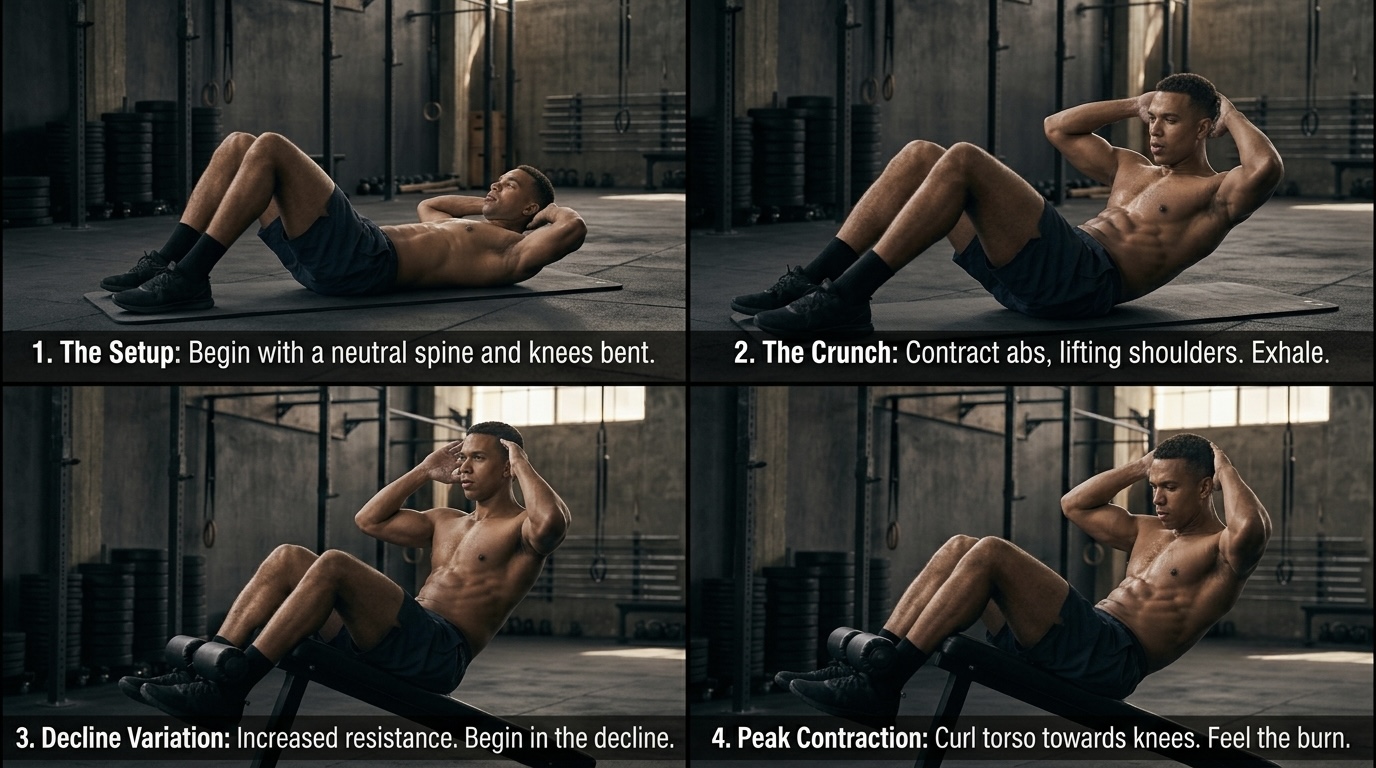
- Pulling on Your Neck: During crunches or abdominal movements, avoid locking your hands behind your head and pulling your neck forward. This causes unnecessary strain. Instead, place your fingertips lightly behind your ears or cross your arms over your chest.
- Arching Your Lower Back: In movements like the Hollow Body Hold or Leg Raises, letting your lower back arch off the floor shifts the load to your hip flexors and strains your spine. Always focus on pressing your lower spine flat into your mat.
- Rushing the Repetitions: Performing reps too quickly relies on momentum rather than muscle tension. Slow down, focus on the mind-muscle connection, and squeeze your abdominals at the peak of each movement.
- Holding Your Breath: Many people hold their breath during intense core exercises. This increases internal pressure and limits performance. Practice deep, controlled breathing—exhaling during the exertion phase and inhaling as you return to the starting position.
Progress Tracking
Do not rely solely on the bathroom scale to measure your progress. Core strength and body composition changes can be tracked in several ways:
- Performance Milestones: Keep a training log. Are you able to hold your RKC plank with perfect form for 5 seconds longer? Can you perform 15 controlled reverse crunches instead of 10? These are clear signs of progress.
- Daily Functionality: Notice how your body feels during everyday tasks. Do you have less lower back discomfort after sitting at your desk? Is your posture naturally taller and more upright?
- Consistency: Consistency is the ultimate metric. Showing up for your workouts week after week will yield lasting results.
Conclusion
Building a strong, stable core is one of the most rewarding fitness goals you can pursue. It enhances your physical capabilities, protects your back, and boosts your overall confidence. By combining this structured home workout with a balanced, protein-rich diet featuring paneer, dal, chana, and dahi, you are setting yourself up for incredible success.
Remember, consistency and customized guidance make all the difference. If you are ready to take your fitness journey to the next level with a personalized home training program and a tailored nutrition plan designed specifically for your lifestyle, let us connect.
Click here to chat with Suman on WhatsApp and start your personalized fitness transformation today!